


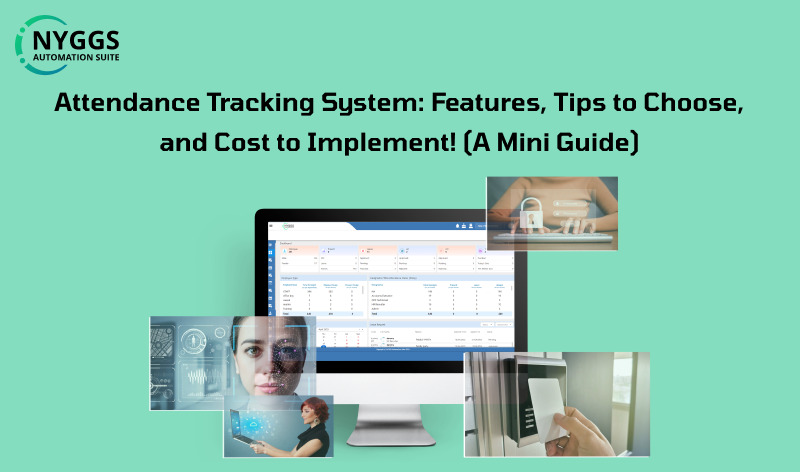
Attendance Tracking is an essential component of every organisation. It assists the HR department in recording employee attendance and the accounting department in making accurate payroll. However, traditional attendance tracking methods can be time-consuming and prone to errors. This is where an Attendance Tracking System comes in.
In this article, we’ll discuss Attendance Tracking System, including their types and features. Additionally, tips for selecting the Attendance Tracking Software for your company.
By the end of this blog, you will understand the importance of the Attendance Tracking System. Also, how it can streamline your employee attendance administration, let’s learn about it.
What is an Attendance Tracking System?
An Attendance Tracking System allows companies to track their employees’ attendance. Attendance includes working hours, absences, and leave requests. It is an automatic system that eliminates the need for manual attendance registers—making it easier for businesses to manage attendance records.
Businesses may struggle with compliance and payroll errors without a reliable attendance system. Also, it can reduce administrative workload by maintaining accurate records. Furthermore, it can help organisations by replacing paper-based timesheets, hence, reducing stationery costs.
Types of Attendance Tracking Systems
Generally, there are two types of Attendance Tracking Systems, manual and digital. Here are some examples of them.
Manual System
Mainly there are two types of manual attendance systems.
- Attendance Register System – When the employees come or leave, they must record their time in an attendance book. It includes their name, arrival or leaving time, and signature.
- Analog System – Each employee has an attendance card in an analog system to record their attendance. This technique is comparable because employees keep track of their own arrivals.
Digital System (Software)
Because digital systems tend to be fast and secure, they have been widely used in many organisations. The types of digital attendance systems are as follows.
- Biometric Attendance Systems – This system uses biometric technology to mark attendance. Which includes- fingerprint scans, iris scans, and facial recognition to record attendance. This type of system is more secure and accurate than manual or bar-code systems.
- Password-Based Systems – Each employee will have a unique password. It may be in the form of either numbers or letters. Simply enter your password into the system to record your presence. It appears simple, but it is easily manipulated.
- Website-based System – Each employee should be able to visit the website and log in to their presence. All they have to do is open the website, input their username and password, and mark check-in.
- Magnetic Cards – Employees can simply swipe their cards on the machine to mark their attendance. Then the attendance details will automatically be saved in the system.
Those days are long gone when organisations depend upon manual attendance monitoring systems. With the current tech advancement, automatic attendance systems are now available. Which effortlessly tracks check-ins and check-outs in real time. Let’s discuss the features of the Attendance Tracking System.
What Are the Features of an Attendance Tracking System?
There are several features in Attendance Tracking System, such as:
- Attendance Recording: The primary task of an Attendance Tracking System is to mark the employees’ attendance. It allows employees to check in or out via biometric scanners or mobile applications.
- Time Tracking: The system tracks the working hours of each employee, including clock-in and clock-out times, break times, and overtime hours. It helps in creating a report of every employee’s timings for analytics.
- Leave Management: The system allows employees to apply for leave and managers to approve or reject them.
- Integration with Payroll Software: The salary calculations depend upon attendance. So, the system integrates with the organisation’s payroll system, which ensures accurate and timely payment of salaries.
- Security: The Attendance Tracking System provides secure access to attendance data, including data encryption, access controls, and user authentication.
What Is the Cost of Implementing an Attendance Tracking System?
Attendance tracking system cost in India varies based on multiple factors. Such as:
- The type of system
- The number of employees
- The features required
- The vendor’s pricing plans.
A basic biometric device system can cost anywhere between Rs 5,000 to Rs 15,000 per device. But, it is a one-time investment. And additional costs may include:
- Installation charges
- Software licensing fees
- Ongoing maintenance charges.
Cloud-based attendance systems provide more advanced features, and remote access may cost more. However, ranging from Rs 40 to Rs 1,000 per employee per month, or sometimes a monthly subscription fee.
Research and compare various providers to find a system that meets your needs and budget. Additionally, it’s essential to consider the potential return on investment. It can ultimately save you time and money in the long run.
How to Choose the Best Attendance Tracking System?
Choosing the best Attendance Tracking System depends on various factors to consider. Here are some of them that help you choose the best one for your company:
- Consider the Features: Ensure your chosen system has features that meet your needs. For example, if you want to track employee time off. Then look for a system that allows employees to request time off and managers to approve it.
- Attendance Capturing Modes: Look for your preferred methods to capture attendance. They can be fingerprint scans or facial recognition.
- Integration Compatibility: Make sure your chosen system is compatible with your current payroll system. Also, it can integrate with any other software system you use.
- Ease of Use: Choose a system that is easy to use for both employees and managers. The system should have a user-friendly interface. So that employees should be able to check in and out easily.
- Look for Reporting Capabilities: The system should provide robust reporting capabilities, which allow you to generate reports on attendance, overtime, and other parameters.
- Check for Security: The attendance tracking system should have appropriate security measures. This is important to protect the data of the employees.
- Consider the Cost: Choose a system that fits your budget. Some systems charge a monthly fee, while others charge as per employee.
- After-Sales Support: Look at whether the system provider is offering after-sales support. So you can address unknown technical errors in the future.
Other factors may include in this list according to your company’s personalisation. However, these are some common factors that apply to every type of business.
If you consider these factors, you can decide wisely to choose the best system.
Conclusion
In this blog, we’ve discussed Attendance Tracking System, its types, and its features. This software is essential for companies to manage their employee attendance effectively. Additionally, this blog showed how much an attendance system costs for your business. Businesses, specifically, need to understand these components of attendance management. It helps manage time and cost, leading to more efficiency in various operations.
In the end, you are able to choose the right Attendance Tracking System for your company. Some vendors in the market, like NYGGS, offer a free demo by which you can experience how the system can work in your business. Contact Us Today!