


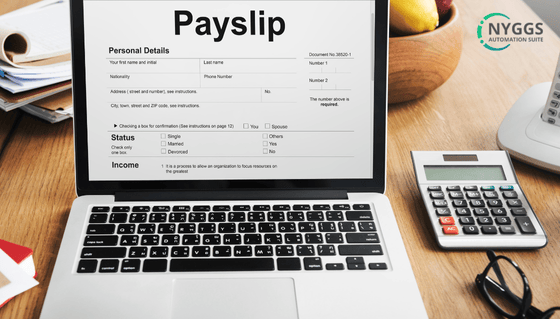
All workers have the right to receive a salary in exchange for their work. The document that clearly and precisely details the compensation an employee receives is called a payslip or salary slip or salary receipt.
There is an official payslip template established by the “Payment of Wages Act, 1936” of India and state-level Shops and Establishment Acts. However, the structure of the salary slip may change if stipulated by a Collective Bargaining Agreement or by agreement between the company and the employee.
What is a payslip? What is the legally approved salary slip format? In this post, we explain all the details about this legal document to employers and HR departments.
What Is a Payslip?
Although there is no legal definition of ‘payslip’, it is a legal document that every Indian organisation has to provide to the employees.
However, to give a specific meaning, payslips are detailed legal and financial documents issued by an employer to an employee, providing an itemised breakdown of the employee’s earnings and deductions for a specific pay period, usually monthly.
Additionally, the salary slip does not prove payment. Meaning it does not prove that the company has fulfilled its obligation to pay its employees. Proof of payment is either the bank transfer record or the duplicate (receipt) of the issued cheque.
What Information Is Included on a Payslip as Per Indian Law?
Typical components of payslip in India generally contains:
The current pay period
A salary slip should clearly include the dates covered for that specific payment period for which the employee is being paid. For example, if employees are paid on a monthly basis, the monthly period should be clearly notated. The same is true for bi-weekly or other periodic payments. The same is true for bi-weekly or other payment models.
Individual earnings categories
Sometimes a worker is paid for other things outside of their regular salary or hourly wages. This section in the payslip provides a breakdown of earnings in various categories for the pay period.
In addition to a regular salary or hourly wage, these might include any overtime pay, bonuses, commissions, remote work allowances, reimbursements, salary advances, or other additional earnings.
Deductions
Deductions refer to any amounts withheld from the employee’s earnings. The most common deductions are for income tax (TDS), Employee Provident Fund (PF), Employee State Insurance (ESI) or medical insurance premiums, Labour Welfare Fund (LWF), professional tax, and other voluntary deductions.
Taxes
This is the most important component of a salary slip, which outlines information about income taxes or TDS withheld from the employee’s earnings as per the applicable salary slab. A payslip will also show other deductions based on the employee’s tax residency, such as surcharge or cess, if applicable.
Gross pay
This is the total amount of earnings before any deductions are taken out. This total will include all wages if the payment combines amounts from differing ‘categories’ such as basic salary, allowances, and bonuses.
Net pay
Net pay, also known as ‘take-home pay’ or ‘in-hand salary’, is the amount the employee receives after all deductions have been subtracted from the gross pay. This is the actual amount the employee will receive in their bank account.
Year-to-date (YTD) totals
This section is completely optional. It provides a summary of the employee’s earnings and deductions for the entire year up to the current pay period. In most cases, employers include YTD earnings on every payslip throughout their financial year, which is typically April to March in India.
Employer contributions
If the employer makes contributions to retirement plans, health insurance, or other benefits on behalf of the employee, those contributions may be listed on the payslip. For example, the employer’s contribution to the PF, gratuity, and other welfare benefits are often noted here.
What Is the Format of a Payslip?
The format of a payroll receipt must follow a specific structure, which is as follows:
- Header: Located at the top of the payslip, it reflects all the employee’s and company’s personal details. It must also include the pay period and the number of days worked.
- Receipt body: It is made up of the amount, which includes salary and non-salary, EPF & ESIC deductions, social security contributions and the accruals withholding base in the payroll.
- Totals: This is the section where the net salary must be calculated. This section reflects the sum of earnings and deductions; the difference between these will determine the net amount to be received.
- Final section: This section details the employer’s contribution. The employer’s contribution is the social security cost borne by the company. In other words, it is the result of applying the corresponding percentage that the company is required to pay, such as LWF and professional tax.
The Standard Payslip Templates
As we have said, the payslip will conform to the payroll payment receipt model approved by the Indian labour laws.
Traditionally, salaries are prepared manually using tools like Excel. In fact, you can download our free payslip template or salary slip template in Excel format.
Get Payslip in Word/Docs Format
If you understand the payslip template, you’ll be more than ready to start calculating the payroll for each of your employees.
Technological advancements and the process optimisation sought by companies have led to new ways of delivering payroll. We’re talking about online payroll software, which is becoming increasingly common in the business world.
In any case, the model and structure of the receipt will be the same as explained above, regardless of whether it is an online salary slip or in the traditional paper format.
Since there is no requirement for delivering payslips, they don’t need to be provided on paper. They can be sent via email or WhatsApp, as long as the employee has access to download and print them.
At NYGGS, we understand the complexity of handling all these procedures for your employees. That’s why our software automates all the payslip processes from generation to emailing it to the employee. Of course, this automation allows you to invest your time in other key tasks and departments.
How Can NYGGS Payroll Help You With Employee Salaries?
1) Generates payslips and manages administrative procedures
Manage and automate payroll processes, and generate payslips along with all essential information.
Enter and modify the data according to the type of salary in your company: salary in kind, flexible remuneration, etc.
Sending via email of automatic salary receipts and electronic signatures of documents.
2) Reports and graphs of salary evolution
Gain visibility with custom reports on business expenses and salary evolution.
Payment of salary supplements and salary advances.
Certificate of personal income tax and TDS withholdings.
3) Automatic reflection in the payroll of salary in kind and company expenses
Add restaurant tickets, professional expenses, invoices, incentives and bonuses. They will be automatically incorporated into the salary receipt.
Import the variables into your employees’ payrolls in bulk from the specific module for this purpose.
You get a salary transfer sheet for the bank with minimal input for paying each month’s wages.
 Want more detailed information? Check out our features or request a free demo to learn more about NYGGS Payroll Software for your business.