



Choosing the wrong construction management software costs more than the subscription fee. It costs delayed projects, duplicate data entry, and coordination failures across sites that compound month after month.
The Indian construction sector has no shortage of software options. The challenge is matching the right one to your company’s project structure, team size, compliance requirements, and budget before you commit to an implementation.
This guide covers the key benefits, must-have features, and a clear selection checklist to help you choose the best construction management software in India for your business in 2026, including where AI-driven tools and GST changes are reshaping what “good” software now looks like.
Benefits of Construction Management Software in India
Everyone is aware of how busy the construction sector is all the time. The workforce may need to design a workflow that manages the team’s and client’s needs. However, completing it manually might consume your entire day. Consequently, this software’s function stands out. They double the system’s efficiency while optimizing the work.
Project Organisation
It provides a platform to manage all aspects of a project. The software helps enable various tasks used in the industry. The features include organizing project schedules, budgets, jobs, and resources. It ensures better coordination and minimises delays or errors.
Improved Collaboration and Communication
The software allows project stakeholders to collaborate and communicate in real time. Additionally, Construction Management Software fosters better teamwork and reduces miscommunication. It enables team members to share updates, documents, and messages.
A trend most similar guides in India still don’t spell out clearly: WhatsApp remains the default communication channel on Indian sites, so software that can sync site updates and photo logs directly into a project record, instead of leaving them stranded in chat threads, tends to see far higher field adoption than tools that force supervisors onto a separate app.
Project Planning and Scheduling
It offers robust planning and scheduling tools. The software helps project managers to create sketches for projects. Anyone can draw timeliness, track progress, and monitor deadlines. This narrows the planning process and optimizes resource allocation. Moreover, it helps meet project milestones.
In 2026, the sharper end of this feature set is predictive: several Indian platforms now use historical weather, labour, and material-delay data to flag likely schedule slippage up to two weeks in advance, rather than only showing managers a Gantt chart after the delay has already happened.
Efficient Document Management
Construction projects involve a large volume of documents. The documents include contracts, drawings, permits, and specifications. Construction management software provides a centralized repository for storing and managing them. This makes them accessible to authorized stakeholders. It reduces paperwork, enhances version control, and improves traceability.
Document-heavy processes like permits and vendor contracts get a lot cleaner once they’re routed through construction procurement software instead of email threads, particularly for vendor onboarding and rate comparisons across multiple suppliers.
Budgeting and Cost Control
The software promotes precise budgeting and cost control throughout the project lifecycle. Also allows for accurate estimation of project costs. It tracks expenses and gives real-time insights into the budget. Additionally, it helps in identifying cost overruns and controlling expenses. That helps in making informed decisions to keep the project within budget.
The budgeting and cost-control piece specifically is where a construction financial management software earns its keep, flagging overruns before they spiral, and in 2026 this increasingly includes automated GST handling for RA (running account) bills, TDS on labour contracts, and reverse-charge entries, which are now treated as baseline requirements rather than nice-to-haves for Indian construction firms.
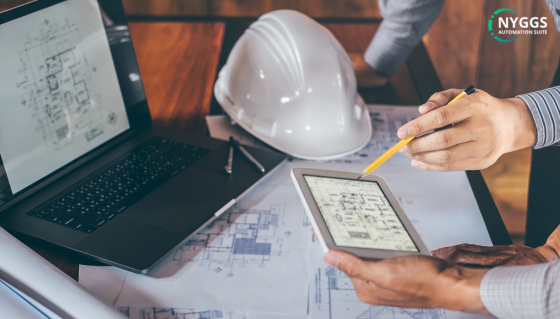
Resources are essential for project completion. With construction management software, project managers can assign resources. Furthermore, check the availability, and optimize resource allocation. Increase output by optimizing staffing levels and equipment distribution.
Features of Construction Management Software in India
You need software as it helps keep all the data organized. So, keep a few features in mind before finalizing the software. The features include:
- Estimating: This is the essential feature most contractors consider. And that makes sense as having a sorted budget is the primary element for deciding the success factor for any construction project.
- Project Scheduling: The software allows small businesses to create and manage project schedules. It provides tools for defining project tasks, assigning duration, and setting dependencies. It helps in visualizing the project timeline. Moreover, it ensures the timely completion of tasks and success.
- Document Management: Small businesses can enjoy this feature of construction management software. It provides a platform for sorting and organizing project documents. Which includes contracts, drawings, permits, or specifications. Furthermore, it facilitates collaboration and simplifies document retrieval.
- Cost Estimation and Budgeting: The software helps small businesses estimate project costs. Which helps them in designing the budget. Additionally, it helps in fashioning the actual prices as per the budget. This feature helps control costs, manage cash flow, and avoid financial setbacks.
- Resource Management: Small businesses can manage their resources using the software. The resources include allocation, scheduling, tracking, and avoiding conflicts and shortages. Moreover, it helps in improving productivity and reducing costs.
- Mobile-First Field Usability: A feature that’s become non-negotiable rather than optional by 2026, site supervisors need to raise material requests, log progress photos, and pull cost reports from a basic smartphone on a live site, often over patchy 4G, without waiting to get back to an office desktop.
- AI-Assisted Site Monitoring: Some platforms now use computer vision on site photos to flag safety issues, such as missing helmets or PPE, and voice-to-text tools that let supervisors report progress in Hindi or regional languages, which the software then converts into structured English reports for head office. This is one of the genuinely new capabilities most 2026 buyer guides mention only in passing, worth actively asking vendors about during a demo.
Additionally, construction management software facilitates collaboration and communication among team members. It provides features like real-time messaging, document sharing, and task assignment. The software enables smooth and efficient project communication. Furthermore, promotes teamwork, reduces delays, and enhances project coordination.
How to Choose Best Construction Management Software in India?
Small businesses need efficient tools to streamline their operations in today’s competitive industry. As it will help in maximizing productivity. Construction Management Software offers a comprehensive solution to manage projects. With many options available, small businesses must select the right software. That suits their specific needs and budget. Here are some points to consider before making the decision:
- Business Requirements: Start by assessing your specific business requirements. Identify the pain points and areas where you need improvement. Are you seeking better project scheduling, resource management, or cost estimation? Understanding your needs will help you narrow down the feature.
- Scalability and Flexibility: Choose a construction management software that is compatible. As a small business, you may have limited resources and project sizes. But it’s crucial to visualize future growth. Ensure that the software can accommodate larger projects, and increased team members. Moreover, choose software that evolves as per the requirements.
- Ease of Use: Small businesses often have limited resources, so opt for an easy software interface. Make sure it does not need extensive training or technical expertise. Consider intuitive navigation and simple workflows. Moreover, a clean design promotes easy adoption by your team.
- Cloud-Based Accessibility: Cloud-based construction management software is recommended for small businesses. It offers benefits like remote access, automatic software updates, and data backups. Additionally, promotes scalability without the need for extra hardware investment. This flexibility allows you to access project information from anywhere. Furthermore, improves collaboration and efficiency in the team.
- Single Platform vs. Modular Stack: A genuinely useful 2026 consideration that older guides skip entirely: not every company needs one large all-in-one ERP on day one. Many mid-size Indian contractors are now deliberately combining a few focused tools, one for estimation, one for site progress, one for GST billing, and scaling into a fuller platform later as project volume grows.
- India-Specific Compliance: Confirm the software handles GST invoicing, RA billing, TDS on labour contracts, e-invoicing thresholds, and, for developers, RERA reporting, out of the box. Platforms built for Western markets often need manual workarounds for these requirements, which defeats the purpose of automating compliance in the first place.
Identify the essential features you need in your Construction Management Software for Small Businesses. Key features may include project scheduling, document management, and cost estimation. Choose a software solution that covers your primary requirements. Furthermore, it offers more features that align with your business goals.
Conclusion
Knowing which is work for you is the best thing you can do because a company managing five residential projects has different software needs from one running infrastructure contracts across three states.
The right construction management software in India is the one that fits how your teams actually work, not the one with the longest feature list.
Use the checklist in this guide to filter your options against your real requirements: project size, team structure, compliance needs, and budget. Start with the features that solve your biggest current problem, not the ones that look impressive in a demo.
If you are looking for construction ERP software built for Indian construction companies, NYGGS Construction ERP covers project scheduling, procurement tracking, subcontractor billing, BOQ-linked billing, and GST-compliant invoicing in one platform.
Schedule a free NYGGS demo to see how it fits your project structure before making a decision.